Logic Puzzles for Kids: Best Types, Benefits, and How to Get Started
Logic Puzzles Often Sit in the Back of the Classroom
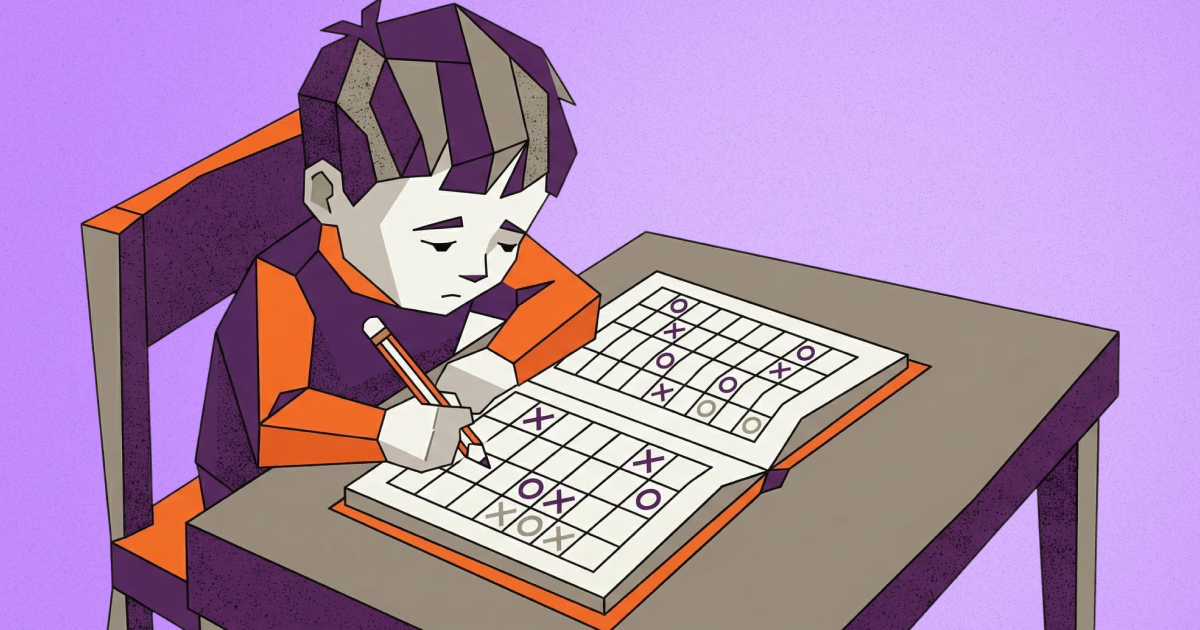
Logic puzzles for kids often sit in the back of the classroom in a "when you're done" folder — a reward for fast workers, not a core activity. But that framing misses what they can actually do. Whether you're a teacher looking for a smarter classroom tool or a parent searching for something more stimulating than screen time, logic puzzles are one of the highest-leverage things a child can spend 10 minutes on.
When used with intention, these puzzles function as a gym for the brain — strengthening neural pathways kids need for STEM success, complex literacy, and everyday critical thinking skills.
This guide covers the best logic puzzles for kids by type and age: grid puzzles, mathematical logic (Sudoku, KenKen, and Queens), and lateral thinking brain teasers. The goal is to help kids build perseverance through immediate feedback loops and develop systematic thinking that sticks.
Key Takeaways
Logic puzzles for kids strengthen executive function and working memory by requiring students to hold multiple variables and constraints in mind simultaneously.
A "Low Floor, High Ceiling" approach—starting with easy entry points and scaling to complex challenges—prevents both boredom and frustration while building mastery.
Process-based assessment focusing on the logic trail and productive struggle matters more than the final answer when grading puzzle work.
Logic puzzles remove language barriers for ESL/ELL students, allowing them to demonstrate sophisticated reasoning through symbols and grids rather than complex syntax.
Systematic puzzle-solving builds problem solving skills that transfer directly to coding, scientific reasoning, and the ability to break large problems into manageable pieces.
The Science of Deductive Reasoning
Logic puzzles stimulate the prefrontal cortex, the brain region responsible for executive function — and are one of the most effective ways to build deductive reasoning skills in kids. Unlike standard worksheets, puzzles require students to hold multiple variables in working memory simultaneously. This translates directly to academic performance and improved reasoning skills.
Cognitive Load and Working Memory
When a student works through a Sudoku grid or a classic "who lives in which house" puzzle, they're juggling three to five constraints at once. Every cell they fill requires checking against multiple rules. This kind of variable management builds reasoning skills kids need for algebra, scientific reasoning, and complex reading comprehension.
The benefits extend beyond math. Pattern recognition in puzzles connects directly to literacy and phonics development—students who can spot recurring structures in a logic grid apply that same skill to decoding words and sentence patterns.
Spatial reasoning tasks like Tangrams are strong predictors of future success in engineering and math. These are diagnostic tools.
The Impact of Game-Based Learning
The numbers support regular puzzle practice. Students who engaged in consistent logic-based gaming showed a 15% improvement in problem-solving speed over a semester. That's a meaningful gain from an activity students actually enjoy.
For early learners and students with ADHD or Autism, pattern-heavy puzzles offer something traditional instruction often doesn't: an entry point that plays to their strengths. Visual supports and pattern-based activities can help neurodiverse learners demonstrate high-level thinking without the barriers that word-heavy problems create.
Taxonomy of Logic Puzzles for Kids
Different puzzles serve different purposes. Selecting the right type depends on your child's age and which thinking skill you want to build.
Logic Grid Puzzles
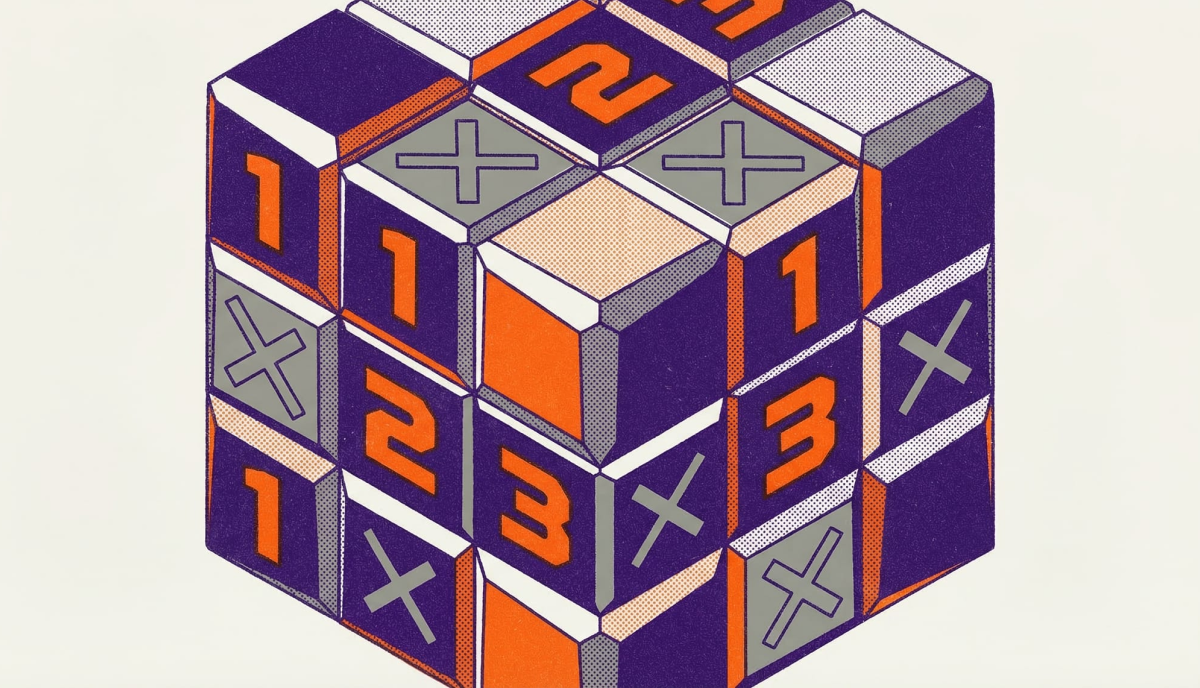
These are the classics: "The person in the blue house does not own a cat." Students use a matrix to track "If-Then" relationships through process of elimination.
The mechanics of logic grid puzzles are straightforward. Each clue lets you mark either a positive match or a negative (X) in the grid. As students work through clues systematically, the solution emerges. This teaches organized note-taking and develops deductive reasoning skills that transfer directly to scientific reasoning and analytical thinking
Logic-puzzles.org offers tiered difficulty levels suitable for elementary through high school students.
Quantitative Logic Puzzles: Sudoku, KenKen, and Queens
Sudoku focuses on Latin squares and non-repeating sequences. The rules are simple; the execution requires patience and systematic checking.
KenKen adds an arithmetic layer. Kids use basic operations to reach a target number within each "cage" while still following the non-repetition rule. Robert Fuhrer, founder of KenKen, says these puzzles build "grit" and "perseverance" because errors become immediately apparent. You can't hide a wrong answer — the math won't work.
For kids who want a logic challenge without any arithmetic, Queens Ultimate is a free daily puzzle where players place queens on a color-coded grid without any conflicts. It's pure deductive reasoning — no math, no words — and a new puzzle releases every day. Ideal for ages 10 and up.
This immediate feedback loop is valuable for any learner. Kids self-correct without waiting for a parent or teacher to check their work.
Lateral Thinking and “Functional Fixedness”
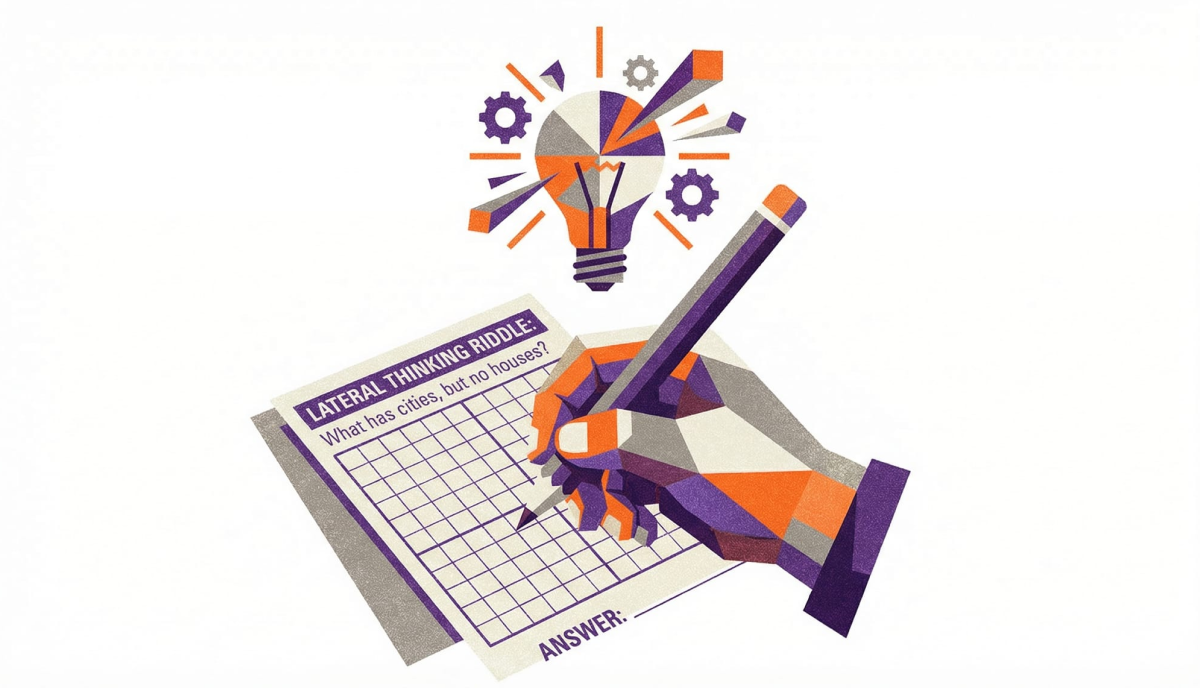
Lateral thinking puzzles are brain teasers that require unconventional perspectives. The famous "Man in the Elevator" puzzle (a short man presses the button for the 7th floor, then walks the rest of the way up—why?) forces students to question their assumptions.
These puzzles combat "functional fixedness," the tendency to see objects only for their traditional uses. Breaking this mental habit is foundational to creative critical thinking skills in design, engineering, and entrepreneurship.
Logic Puzzles for Kids by Age
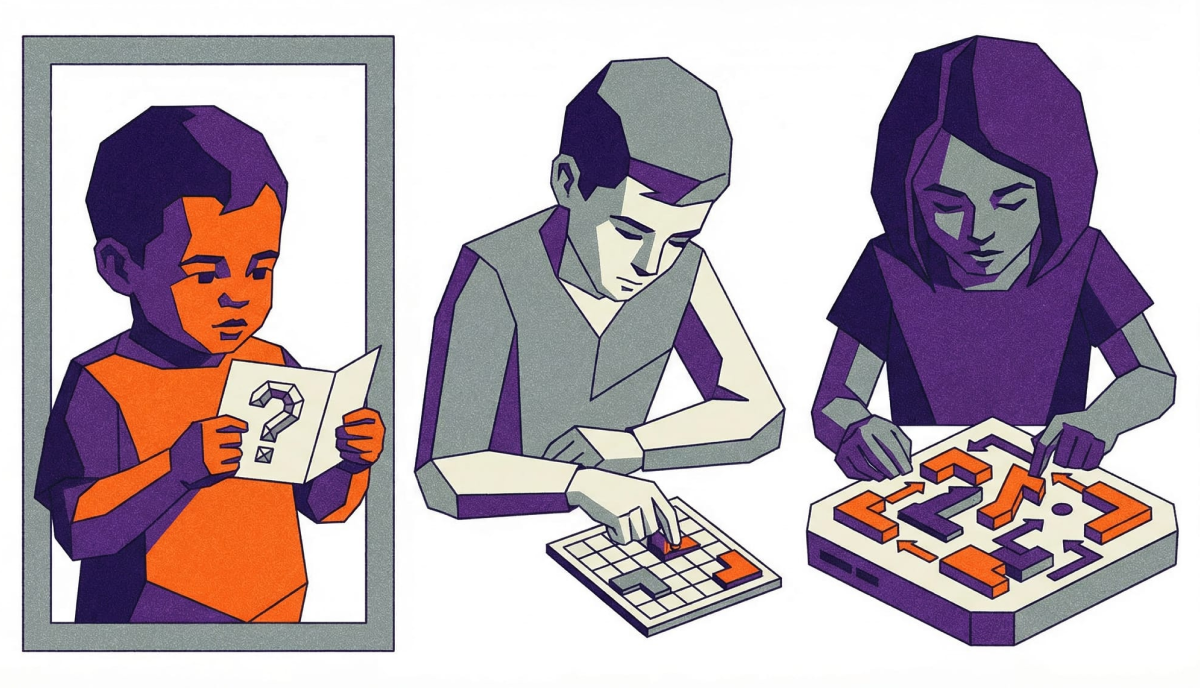
Not all puzzles work for all ages. Here's how to match the puzzle to the child.
Ages 5–7: Riddles and Pattern Puzzles
Start simple. For early learners, simple brain teasers and lateral thinking riddles are the best entry point — short, playful questions that reward creative thinking over calculation.
Try these:
- I have hands but can't clap. What am I? (A clock)
- The more you take, the more you leave behind. What am I? (Footsteps)
- What has one eye but can't see? (A needle)
Picture-based sequencing puzzles (what comes next in the pattern?) also work well here. No grids, no math — just building the habit of looking for structure.
6x6 sudoku is another excellent starting point — here's a beginner's guide to 6x6 sudoku worth bookmarking.
Ages 8–10: Grid Puzzles and Mini Sudoku
This is the sweet spot for classic deduction puzzles. A 3×3 logic grid with 3–4 clues is approachable and satisfying — most kids can make their first move immediately and feel momentum early.
Mini Sudoku — a 6×6 version of classic Sudoku — is fast (under 5 minutes), free, and builds systematic thinking without the full cognitive load of a 9×9 grid. It's a better starting point than standard Sudoku for this age range.
Sample grid puzzle for this age:
| Kid | Pet |
|---|---|
| Sam | Cat |
| Alex | Dog |
| Jordan | Fish |
Three kids — Sam, Alex, and Jordan — each have a different pet: a dog, a cat, and a fish. Sam doesn't have the fish. Alex doesn't have the dog. Jordan has the fish. What pet does each kid have?
(Answer: Sam = cat, Alex = dog, Jordan = fish)
Ages 11 and Up: KenKen, Queens, and Multi-Step Deduction
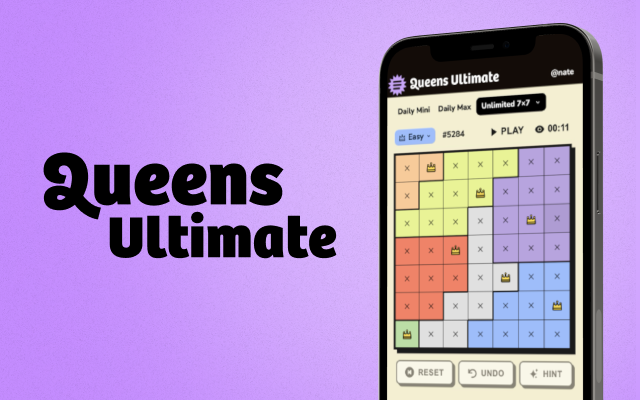
Older kids are ready for puzzles that layer multiple constraints. KenKen combines arithmetic with grid logic — a harder challenge that still gives immediate feedback. For kids who prefer logic without math, Queens Ultimate is a free daily puzzle that requires placing queens on a color-coded board without conflicts. It's quick, replayable, and genuinely difficult at higher levels.
At this stage, introduce 5×5 or larger grid deduction puzzles with compound clues. The challenge of holding four or five constraints in working memory simultaneously is exactly the kind of exercise that pays off in algebra and analytical writing.
Implementation: The “Low Floor, High Ceiling” Strategy
The most common mistake is giving a puzzle that's either too easy (boring) or too hard (frustrating). Effective implementation requires what mathematicians call a "Low Floor, High Ceiling" approach—tasks that are easy to start but difficult to master.
A 3x3 logic grid with three clues? Most students can begin immediately. A 5x5 grid with compound clues? That's where mastery lives.
Scaffolding for Success
Model the thinking out loud. Use a document camera to demonstrate how you read a clue, identify what it tells you, and mark the appropriate cells. Students need to see the internal process made external.
Provide clue checklists. Teach students to check off each clue as they've extracted all possible information from it. This reduces cognitive overwhelm and prevents the frustrating experience of missing something obvious.
Teach backward mapping. When stuck, assume a solution is true and work backward. If the assumption creates a contradiction, you've learned something. This strategy (proof by contradiction) is foundational to mathematical reasoning.
Collaborative Solving and “Math Talk”
Solving in pairs promotes metacognition. When students explain their logic to a peer, they're forced to think about their own thinking. "I know this box is an X because..." requires articulating reasoning skills that might otherwise remain undeveloped.
Your role shifts here. You're the process-prompter. Instead of "That's wrong," try "What clue told you that?" Instead of "Here's the answer," try "What do you know for certain?"
Integrating Logic into the Broader Curriculum
Logic puzzles work as precursors to more complex academic disciplines.
The Bridge to Coding and AI
The "If-Then-Else" structure of logic puzzles maps directly onto Boolean logic in programming. Code.org's "unplugged" activities use logic puzzles to teach computational thinking without requiring a computer.
Puzzles like "Rush Hour" (where you slide cars to free a blocked vehicle) teach algorithmic thinking that prepares students for writing sequences in Python or Scratch. The mental model is identical: break a large problem into sequential steps, test each step, adjust when blocked.
Language-Light Learning for ESL/ELL Students
For non-native English speakers, logic puzzles remove a significant barrier. A student with limited English proficiency can demonstrate sophisticated reasoning through symbols and grids. The playing field levels when the task doesn't require complex syntax.
This matters for assessment too. A student who struggles to write a paragraph explaining their thinking might excel at showing their logic trail through marked-up puzzle grids.
Assessment and Grading Strategies
Traditional grading fails logic puzzles because it only looks at the final answer. A student who made one small error early might have a completely wrong grid despite excellent reasoning. To make puzzles a valid part of your curriculum, focus on process.
Process-Based Rubrics
Grade the "logic trail." Look at the notes and marks in the margins. Did the student systematically work through clues? Did they use X's and checkmarks consistently? The journey matters more than the destination.
Use reflection journals. Ask students to write three sentences about their "aha" moment—when did the puzzle crack open? What strategy finally worked? This builds metacognitive awareness.
Measure productive struggle. Track time spent and strategies attempted. A student who tried four approaches before succeeding learned more than one who got lucky on the first guess.
Gamification and Digital Tracking
Platforms like Brilliant.org and ThinkFun's digital tools track student progress through increasingly difficult levels. This allows differentiated pacing—students move forward when ready, not when the class does.
The automated feedback also frees you to circulate and ask process questions rather than checking answers.
Advanced Applications: Escape Rooms and Ethics
For older students, logic puzzles can evolve into immersive experiences. Breakout EDU provides classroom escape room kits that require teamwork, time management, and multi-step logical reasoning. The physical stakes (a locked box, a ticking clock) add engagement without changing the underlying cognitive demands.
Logic also bridges into philosophy. "The Trolley Problem" and similar dilemmas use logical structures to explore ethical reasoning. Students learn that logic alone doesn't answer every question, but it clarifies what the question actually is.
The Systematic Mind
The goal is to produce students who don't panic when they encounter a problem they haven't seen before.
As Dr. Jo Boaler of Stanford notes, logic puzzles level the playing field. They don't require a massive vocabulary or prior historical knowledge. They require a clear mind and a systematic approach — and that's exactly what logic puzzles train.
Marcel Danesi, Professor of Semiotics, puts it simply: "Puzzles are not just a diversion; they are a rehearsal for the challenges of life. They teach us how to break a large problem into small, manageable pieces."
That skill (breaking the "unsolvable" into small, manageable pieces) outlasts any specific lesson plan. It's what students carry with them long after they've forgotten the content of any particular unit. And it starts with a puzzle grid and a pencil.
Frequently Asked Questions
What age should kids start logic puzzles?
Kids can start as young as 4–5 with simple brain teasers and picture-based pattern puzzles. Grid-based logic puzzles — the kind with clue matrices — are a good fit from around age 7 or 8, once kids can follow multi-step instructions. There's no upper limit: logic puzzles scale with difficulty, making them engaging well into high school and beyond.
Are logic puzzles good for kids?
Yes. Logic puzzles build working memory, deductive reasoning, and pattern recognition — all skills that transfer directly to math, reading comprehension, and scientific thinking. They also teach perseverance: unlike worksheets, puzzles give immediate feedback, so kids learn to self-correct without waiting for a teacher.
What are easy logic puzzles for kids?
The easiest entry points are lateral thinking brain teasers and 3×3 grid deduction puzzles with 3–4 clues. Both have low barriers to entry and give kids a quick win that motivates them to try harder versions. For grid puzzles, logic-puzzles.org offers tiered difficulty starting at beginner levels.
What is the best free logic puzzle for kids online?
Queens Ultimate is a free daily logic puzzle well-suited for kids ages 10 and up. It uses color-coded grid logic — no arithmetic, no words — making it accessible and fast to play. New puzzles release every day, which builds a consistent thinking habit. For younger kids, Mini Sudoku (minisudoku.com) is a great 6×6 option that plays in under 5 minutes.
Do logic puzzles help with math?
Directly, yes. Grid puzzles and Sudoku build the same constraint-satisfaction thinking used in algebra. KenKen adds arithmetic practice on top of that. But the benefits go beyond math — the systematic thinking, variable tracking, and proof-by-contradiction skills developed through puzzles show up in coding, reading, and scientific reasoning too.
What's the difference between a logic puzzle and a brain teaser?
Brain teasers are typically one-and-done brain teasers and riddles with a surprising answer. Logic puzzles require sustained multi-step reasoning — you're building toward a solution through a chain of deductions, not waiting for an "aha" moment. Both are valuable, but logic puzzles build more durable thinking habits because the process itself is the workout.
 Mini Crossword
 Midi Crossword
 Diffle
 Killer Sudoku
 Numberle